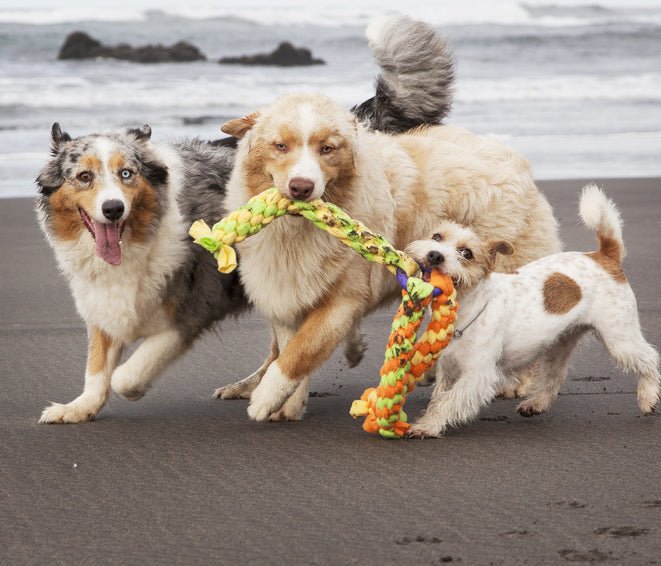
Play is a fundamental aspect of canine behavior that serves a vital role in promoting mental and emotional well-being. From romping with toys to engaging in interactive games, play behavior provides numerous psychological benefits for dogs, contributing to their overall happiness and fulfillment.
1. Physical and Mental Stimulation
Play engages a dog’s body and mind, providing essential physical and mental stimulation. Interactive games, such as fetch or hide-and-seek, require dogs to use their senses, problem-solving skills, and coordination, keeping their minds active and engaged. Engaging in play also helps prevent boredom and the development of undesirable behaviors, such as excessive barking or chewing, by providing an outlet for excess energy and pent-up frustration.
2. Stress Reduction and Relaxation
Play has been shown to reduce stress and promote relaxation in dogs. When dogs engage in play, their brains release neurotransmitters such as dopamine and endorphins, which are associated with feelings of pleasure and relaxation. Play also helps reduce levels of cortisol, a stress hormone, leading to a calmer and more contented state of mind. For dogs experiencing anxiety or fear, engaging in play can provide a welcome distraction and help alleviate negative emotions.
3. Social Bonding and Communication
Play behavior plays a crucial role in social bonding and communication among dogs. Through play, dogs learn to interpret and respond to each other’s body language, vocalizations, and play signals, enhancing their ability to communicate effectively with other dogs. Play also strengthens social bonds between dogs and their human companions, fostering trust, affection, and a sense of belonging within the pack. Interactive play sessions provide opportunities for quality time and bonding between dogs and their owners, deepening the human-canine relationship.
4. Development of Cognitive Skills
Play promotes the development of cognitive skills in dogs, including problem-solving, memory, and spatial awareness. Interactive toys, puzzle feeders, and agility courses challenge dogs to use their brains in creative ways, stimulating their intellect and enhancing their learning abilities. Engaging in play from a young age is especially important for puppies, as it helps them develop critical cognitive skills and adapt to their environment.
5. Emotional Expression and Regulation
Play allows dogs to express themselves emotionally and practice emotional regulation. Through play, dogs can release pent-up energy and emotions in a safe and constructive manner, reducing the likelihood of behavioral problems associated with emotional dysregulation. Play also provides an outlet for dogs to experience joy, excitement, and enthusiasm, contributing to their overall emotional well-being and sense of happiness.
6. Promotion of Physical Health
In addition to its psychological benefits, play promotes physical health and fitness in dogs. Running, jumping, and chasing during play sessions help maintain healthy weight, build muscle strength, and improve cardiovascular health. Regular exercise through play also reduces the risk of obesity, joint problems, and other health issues, prolonging dogs’ lives and enhancing their overall quality of life.
Play behavior is essential for promoting canine mental health and well-being. Through play, dogs experience physical and mental stimulation, stress reduction, social bonding, cognitive development, emotional expression, and physical fitness. As responsible pet owners, providing opportunities for play and interactive engagement is crucial for ensuring our dogs lead happy, healthy, and fulfilling lives.